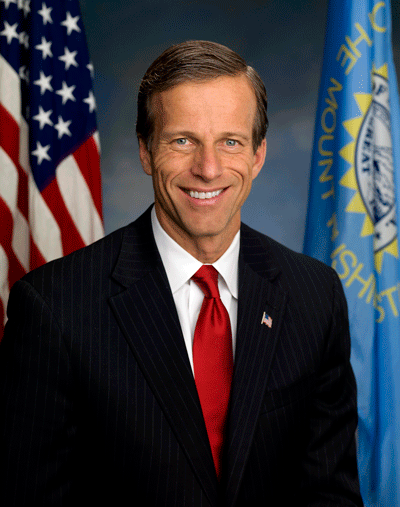
Thune, Peters Demand Answers From TSA on Delayed PreCheck Enrollment Expansion
“We are concerned with TSA’s implementation of the TSA Modernization Act’s language aimed at expanding enrollment opportunities in areas which – due to geographical or other circumstances – lack accessible enrollment options.”
WASHINGTON — U.S. Sens. John Thune (R-S.D.) and Gary Peters (D-Mich.) today called on Transportation Security Administrator (TSA) David Pekoske to prioritize expanding the PreCheck program to individuals in underserved areas without accessible and secure enrollment options. The senators also noted that reports citing security breaches from CLEAR, an airport membership program that fast-tracks airline passengers though security checkpoints, underscore the need for TSA to ensure enrollment service providers are held to the highest security standards.
“It is crucial that other transaction authority (OTA) agreements reached by TSA fully reflect congressional intent to expand PreCheck enrollment opportunities in new communities, particularly those in rural areas, through the use of innovative technologies and methods,” wrote the senators. “We are concerned that entities operating under OTA agreements are instead duplicating services already provided under the Universal Enrollment Services (UES) program. We are also concerned about reports of serious security breaches by CLEAR and request more information regarding how TSA is ensuring that CLEAR and other OTA providers maintain the highest security standards before executing OTA agreements with TSA.”
Thune previously authored the TSA Modernization Act, the first reauthorization of the agency in its history, which brought greater stability to the agency’s leadership and put new security assets in place to better protect travelers and minimize delays.
We write regarding the future of the Transportation Security Administration’s (TSA) PreCheck program and TSA’s progress toward expanding enrollment in a secure manner, consistent with the TSA Modernization Act. It is crucial that other transaction authority (OTA) agreements reached by TSA fully reflect congressional intent to expand PreCheck enrollment opportunities in new communities, particularly those in rural areas, through the use of innovative technologies and methods. We are concerned that entities operating under OTA agreements are instead duplicating services already provided under the Universal Enrollment Services (UES) program. We are also concerned about reports of serious security breaches by CLEAR and request more information regarding how TSA is ensuring that CLEAR and other OTA providers maintain the highest security standards before executing OTA agreements with TSA.
We recognize your strong commitment to expanding PreCheck given how essential the program is to improving aviation security and the efficiency of screening checkpoints. However, we are concerned with TSA’s implementation of the TSA Modernization Act’s language aimed at expanding enrollment opportunities in areas which – due to geographical or other circumstances – lack accessible enrollment options. As you know, Section 1937 of the TSA Modernization Act directs TSA to enter into OTA agreements to provide enrollment services in a way that is additive – not duplicative – of enrollment services provided under UES.
Unfortunately, it appears that OTA agreements reached by TSA duplicate the enrollment services provided by UES. For example, many of the locations where these services are provided through OTA agreements appear to be in close geographic proximity to enrollment centers provided under UES. Additionally, the enrollment services provided through OTA do not appear to utilize novel approaches or technologies, such as mobile or remote enrollment, which could greatly expand access to TSA PreCheck for Americans. Effectively, the enrollment services provided through the two existing OTA agreements still leave rural communities and other underserved areas without an accessible enrollment option, in contravention of the intent of the TSA Modernization Act.
We are also aware that CLEAR has been authorized to provide OTA enrollment services despite having recently undergone a TSA probe due to numerous reports of security breaches at airports where CLEAR provides services under the registered traveler program. Based on the major security threats outlined in these reports, we have serious concerns about CLEAR’s viability as a provider of enrollment services pursuant to their OTA agreement without a full TSA investigation of these reports or documentation of actions both CLEAR and TSA have taken to address these issues.
We believe that TSA should use the OTA agreements awarded in accordance with Section 1937 to focus solely on expanding PreCheck enrollment opportunities – especially through the use of new technologies – to communities who lack accessible enrollment options rather than duplicating enrollment services already provided under the UES program. We also believe entities providing services under OTA should be held to the highest security standards to keep the traveling public safe.
Accordingly, we respectfully request that you respond in writing to the following questions within 30 days:
What criteria does TSA use to review and approve proposed new enrollment centers under OTA agreements?
Has TSA considered other methods, including new technology, to expand enrollment in PreCheck, particularly to rural and other underserved areas, using OTA agreements? If so, can you describe those methods?
Has TSA made progress in working with the Federal Bureau of Investigation to develop secure methods of biometric identification for use in a remote PreCheck enrollment option?
Has TSA worked with other federal partners to consider leveraging additional security information, such as security clearance investigations, to inform or supplement other enrollment pathways?
How is TSA working to ensure that new enrollment centers established pursuant to OTA agreements are not duplicative – geographically or otherwise – with enrollment services provided under UES? What criteria does TSA use to establish new centers?
Can you describe how enrollment services provided through OTA agreements interact with such services provided under UES, specifically as they relate to online renewal enrollment services for PreCheck?
What actions has TSA taken in response to reports of serious security breaches by CLEAR?
Has TSA taken the reported security breaches by CLEAR into account as part of its continued oversight of CLEAR as an OTA provider? If so, what actions has the agency taken in response, and what measures has CLEAR taken to remedy its vulnerabilities?
Thank you for your attention to these issues, and we look forward to working with you to keep the national aviation system secure. Should you have any questions, please do not hesitate to contact our staff.
SD Legislature Supports Securing Southern Border Resolution of Support Passes Moments after Gov. Noem’s Address
PIERRE, S.D. – Today, the South Dakota Legislature passed HCR 6010 acknowledging the need to protect our borders and affirming South Dakota’s support of the defense of the Southern Border.
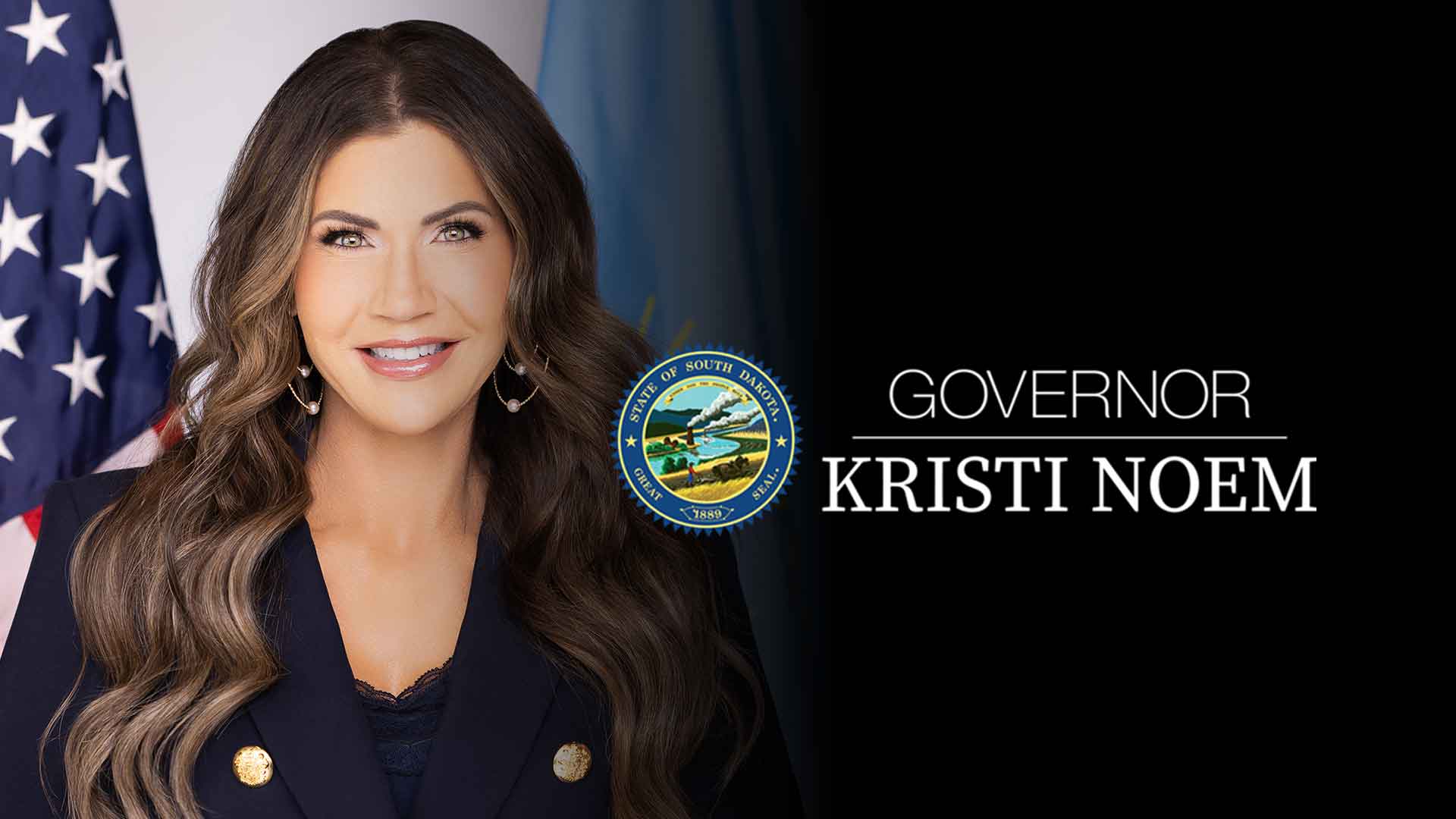
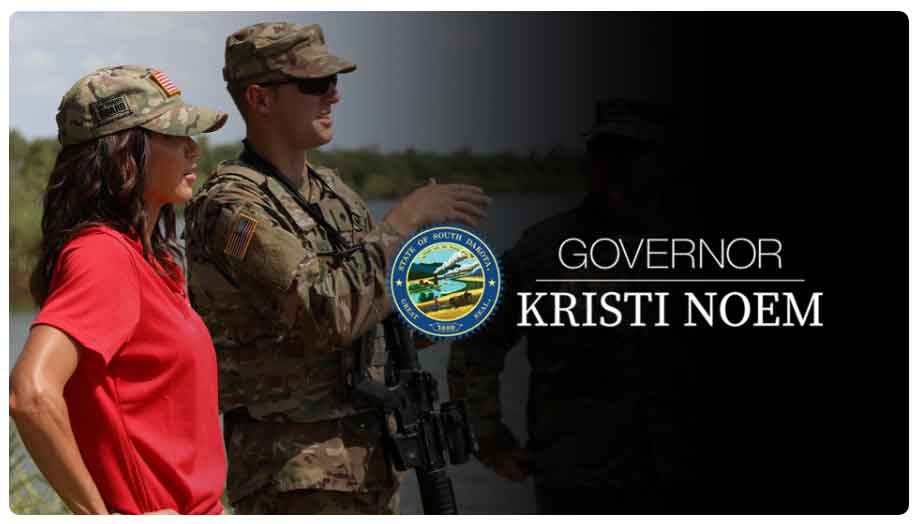
This resolution passed overwhelmingly moments after Governor Kristi Noem briefed a joint session of the South Dakota Legislature to inform legislators on how the invasion of our Southern Border is impacting South Dakota.
“The national security crisis happening at the Southern Border affects every state, including South Dakota,” said Governor Noem. “I am glad that the Legislature sees the severity of this matter and agrees that we need to take action to secure our borders.”
Governor Noem’s full border address to the joint session of the South Dakota Legislature can be found here.
Dusty Johnson, Smith, Costa, and Panetta Launch Ag Trade Caucus
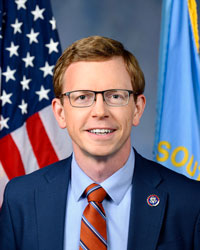
Washington, D.C. – Today, U.S. Representative Dusty Johnson (R-S.D.), Adrian Smith (R-NE), Jim Costa (D-CA) and Jimmy Panetta (D-CA) announced the launch of the bipartisan Congressional Agricultural Trade Caucus to advance and promote policies vital to U.S. agriculture, including boosting agricultural exports, facilitating food and agriculture trade, and knocking down unnecessary trade barriers.
As co-chairs of the caucus, the members released the following statements:
“Ensuring access to international markets for ag products is essential for South Dakota producers,” said Johnson. “I look forward to working with the co-chairs to help booster America’s ag exports to retain healthy demand for our farmers and ranchers.”
“American agriculture producers have the capacity to feed and fuel the world, and robust engagement on trade opportunities is vital to unleashing this potential,” said Smith. “Increasing—and maintaining—market access for our first-class products through rules-based trade strengthens our economy, increases economic security with our allies, and benefits consumers worldwide. I thank my fellow co-chairs for joining me in this effort to advance bipartisan trade policy.”
“Representing the breadbasket of the world, access to global markets is critical to our economy,” said Costa. “As Co-Chair of the Agricultural Trade Caucus, I look forward to working together to promote trade policies that will ensure American farmers remain competitive on the global stage.”
“Congress needs to be more active in promoting trade agreements that will keep American producers competitive and empower them to feed the world,” said Panetta. “The bipartisan Agriculture Trade Caucus was founded to ensure the farmers and ranchers in our districts and throughout the country are prioritized in our nation’s overall trade agenda. Together, we are committed to ensuring new trade agreements are enforceable, high-standard deals that ensure fairness and expand new markets for the immense bounty our country produces.”
The new bipartisan Congressional Agricultural Trade Caucus will work to solidify support for trade policies that benefit farmers, ranchers, producers, rural communities, and all those along our food and agricultural supply chains. The caucus will support education and engagement opportunities for members of Congress to promote policies which boost international competitiveness, increase market access, address non-tariff barriers to trade, improve supply chains, and reestablish U.S. global leadership on trade.
..has suddenly taken ill, and can no longer speak to the group of Republicans who regularly do vote in the primary.
Please keep Toby in your thoughts and prayers as he combats this serious illness which prevented him from conversing with the Republicans who were planning to attend tomorrow.
An Act toprohibit the intentional release of polluting emissions into the atmosphere by cloud seeding, weather modification, excessive electromagnetic radio frequency and microwave radiation and providing enforcement and penalties for violations.
Be it enacted by the Legislature of the State of South Dakota:
Section 1. That a NEW SECTION be added to chapter 34A-1:
Terms used in this Act mean:
(1) “Cloud seeding,” a type of weather modification that attempts to change the amount or type of precipitation by dispersing chemicals such as silver iodide, potassium iodide, and dry ice into the air by means of aircraft or ground generators;
(2) “Stratospheric aerosol injection,” proposed method of solar radiation modification that would introduce aerosols into the stratosphere to create a cooling effect by reducing the amount of sunlight reaching the earth, mimicking what happens naturally during a volcanic eruption;
(3) “Weather modification,” the act of altering or manipulating the weather; and
(4) “Xenobiotic,” foreign to life.
Section 2. That a NEW SECTION be added to chapter 34A-1:
Any person may report a suspected aircraft, balloon, drone, facility, or other delivery system used for weather modifying applications, cloud seeding, or any atmospheric experimentation involving the release of polluting emissions detected by the public, law enforcement, first responders, or state officials to the county sheriff’s office in the county in which it was observed or suspected. If the county sheriff finds the reported evidence worthy of investigation, the sheriff shall investigate further and may report supporting evidence of violative activity to the Governor’s office.
Section 3. That a NEW SECTION be added to chapter 34A-1:
The Governor or the sheriff in the county where reported shall immediately issue a cease-and-desist order upon the discovery of weather engineering, cloud-seeding, or any other polluting atmospheric activity, where an agency, public official, department, office, program, or member of the public produces evidence to the Governor or sheriff that the activity involves a polluting emission. The cease-and-desist order has the weight of a court order and any violation is punishable under law.
The Governor may call upon the adjutant general of the South Dakota National Guard to identify and notify any aircraft, drone or other facility releasing aerosol emissions, electromagnetic radiation, or other pollutants into the atmosphere that they are required to cease and desist. The aircraft, drone or other facility must be ordered to land at the nearest available airport to be investigated for violative activity.
The Governor may call upon the state law enforcement to investigate instances that may be in violation of this Act. The Governor may call upon the Department of Agriculture and Natural Resources for environmental studies to investigate if and what chemicals may have been dispersed in violation of this Act.
Section 4. That a NEW SECTION be added to chapter 34A-1:
Where an activity that the Governor or any sheriff has deemed hazardous has been approved, explicitly or implicitly, by the federal government, the Governor or the sheriff shall issue a notice to the appropriate federal agency, foreign state, or international body that the hazardous activity cannot lawfully be carried out within or over the state of South Dakota, pursuant to the Tenth Amendment. Government agencies or projects, universities, public or private entities, and armed forces operating within or above the state of South Dakota must meet all the requirements of this Act.
Section 5. That a NEW SECTION be added to chapter 34A-1:
No person may engage in a polluting atmospheric activity or use an unmarked or unidentified aircraft or other vehicle or facility to carry out a weather engineering, cloud-seeding, or other hazardous atmospheric activity. A violation of this section is a class 6 felony, except that a fine of five hundred thousand dollars may be imposed.
Section 6. That a NEW SECTION be added to chapter 34A-1:
The Governor and each county sheriff shall encourage the public to monitor, measure, document, and report incidents that may constitute cloud seeding, stratospheric aerosol injection, weather modification, or other environmental polluting activities.An individual who presents evidence of a polluting atmospheric activity shall e-mail or otherwise write and send any of the following to the county sheriff, or to the Governor’s office:
(1) Evidentiary photographs, each separately titled as an electronic or hard-copy document, with the respective location from which, and if the content is from other than a measuring device, the direction in which, the photo was taken, with its time and date;
(2) Independent precipitation analysis reports, photography, videography, audiography, microscopy, spectrometry, metering, and other forms of evidence shall similarly be submitted in writing to the county sheriff, to any state office, or any state public official; or
(3) Videography of activity involving release of polluting emissions.
A public official who has received submitted information and has reason to suspect violative activity based on evidence presented by an individual or an agency must, directly or through a designee, report in writing within twenty-four hours all documentary and supportive evidence to the county sheriff for enforcement. The county sheriff may request assistance from state law enforcement to investigate possible violative activity as well as the Department of Agriculture and Natural Resources for technical assistance and analysis of pollutants as needed.
A report to the county sheriff or Governor of polluting atmospheric emissions shall trigger investigation of the source and contents of the emissions, without limitation. Where the emissions are harmful to humans or the environment, per primary scientific study, enforcement must ensue.
A report to the county sheriff of excessive electromagnetic radiation or fields in any part of the spectrum, including without limitation microwave or maser, infrared, light or laser, ionizing or non-ionizing radiation, or report of intense mechanical vibration, noise, or other physical agent, with evidence, including possible photography, videography, audio recordings, measurements of the agents, or other detection, must result within two hours of receiving the report in emergency measurements of peaks and averages over time with the appropriate, calibrated meter and forensic detection devices at the reported location.
Where professional metering and monitoring equipment is needed but not owned by the state, the sheriff shall partner with state universities or colleges and their experts for investigative activity, so as to provide evidentiary findings that would qualify as scientific expert testimony.
Section 7. That a NEW SECTION be added:
Weather engineering or atmospheric experimentation involving the release of xenobiotic agents or electromagnetic radiation at hazardous levels requires enforcement as follows:
(1) The sheriff’s immediate communication of the requirement of the owner or operator of each facility or infrastructure deploying or releasing the specific agent to produce records of the operations of any site where xenobiotic agents or excessive levels have been detected, and convey the records to the sheriff;
(2) The sheriff’s immediate order to cease operations of the facility; and
(3) The sheriff’s evaluation within twenty-four hours of the owner’s or operator’s performance in causing the cessation of all operations.
Section 8. That a NEW SECTION be added to chapter 34A-1:
The sheriff shall immediately require the owner or operator of each tower, antenna, other facility or infrastructure to produce records of the extant operations at sites where excessive xenobiotic electromagnetism and fields, mechanical vibration, or other physical agents are, or have been detected, specifically:
(1) Radiofrequency or microwave radiation, including maser, of signal strength metered at the reported, publicly accessible location in excess of negative eighty-five dBm for any frequency or channel band specified by a transmitting entity’s FCC transmission license;
(2) Extreme-low-frequency alternating current electric fields in excess of 1 volt per meter;
(3) Magnetic fields in excess of one milliGauss;
(4) Ionizing radiation in excess of 0.02 milliSievert per hour;
(5) Laser or other light with harmful effects; or
(7) Any vibration, noise, saser, sonic weapon, or other physical agent exceeding building biology guidelines.
The owner or operator must convey the records to the sheriff within twenty-four hours.
The sheriff shall immediately order a cessation of operations of all antennas and other deployments of energy or vibration emitted from the measured structure or facility. The sheriff shall evaluate within twenty-four hours the owner or operator’s performance in causing the cessation of all operations. The sheriff shall refer suspected criminal activity to the state’s attorney for prosecution.
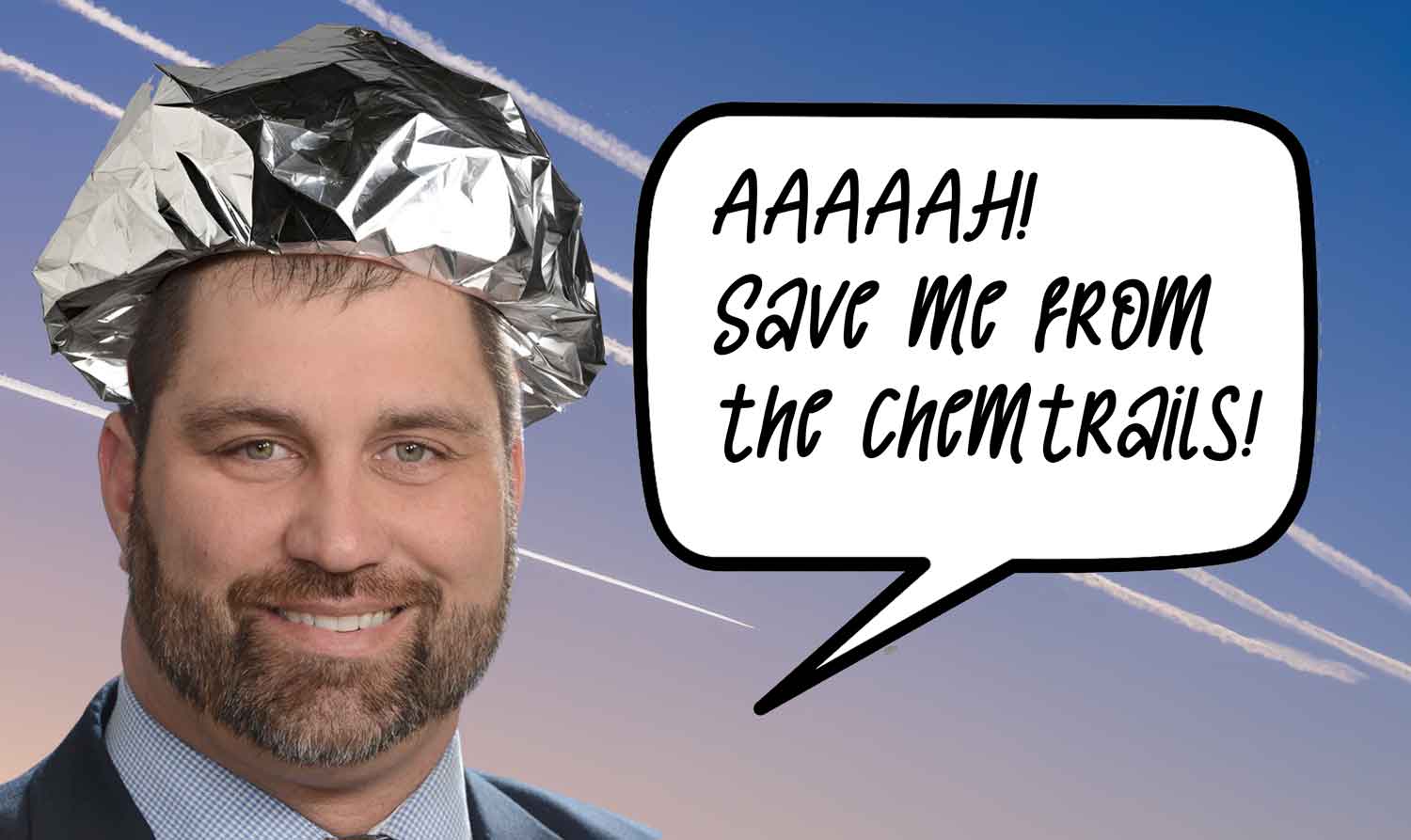
So, in addition to the other goofy measures that have been proposed, now South Dakota legislators are going to be tasked with the burning questions on chemtrails, xenobiotic electromagnetism, and cloud seeding, as Tom demands that Sheriffs be tasked with investigating “sasers” and sonic weapons. And the National Guard will be called out to investigate whether those planes going over are conducting “Stratospheric aerosol injection” as they try “weather modification.”
Every day with the South Dakota Legislature is an adventure..
Gov. Noem’s Border Address to Joint Session of SD Legislature By: Governor Kristi Noem January 31, 2024
Lieutenant Governor Rhoden, Mr. Speaker, members of the House and Senate, and my fellow South Dakotans:
Thank you for calling this joint session of the legislative body today so I may address both chambers on a matter of grave importance to the people of South Dakota and the United States of America. It is no secret that our country is being overwhelmed with en masse illegal immigration. Nearly 10 million foreign nationals have broken federal law and infiltrated our country within the past 3 years, bringing with them drugs, trafficking, crime, and violence.
Our immigration system has long been a subject of discussion in this country, but the policies of the Biden Administration have elevated this to a national security crisis. Our history is proudly built on the stories of our ancestors who came to this country for opportunity and a new beginning. But today, many of those who are entering under the current policies of this administration are known terrorists, criminals, human traffickers, and drug cartel members. Because the federal government is facilitating the violation of federal law, vulnerable people from over 100 countries have heard the story of the open border, put their families in jeopardy, and have fallen victim to the atrocities of the Mexican cartels. Countries such as Venezuela have been known to empty out their prisons and mental institutions and send them to America. They are happy to let our open border be the solution to their problems and responsibilities.
We are a nation of laws. And our leaders should respect those laws.
South Dakota is directly affected by this invasion. We are affected by cartel presence on our tribal reservations; by the spread of drugs and human trafficking throughout our communities; and by the drain on our resources at the local, state, and federal level.
America is the greatest nation in the history of the world. But we weren’t always that way. Our nation started as nothing more than an idea – an idea that was so controversial that our Founding Fathers had to pledge their lives, their fortunes, and their sacred honor to each other just to write it down.
That all men are created equal, that they are endowed by their Creator with certain unalienable Rights, that among these are Life, Liberty and the pursuit of Happiness. That to secure these rights, Governments are instituted among Men, deriving their just powers from the consent of the governed. That whenever any Form of Government becomes destructive of these ends, it is the Right of the People to alter or to abolish it.
In that powerful document, our Founding Fathers outlined certain facts, a list of injuries, that King George had perpetrated against the colonies. Those grievances included ways that he failed to protect the colonies, and how he used force to make the colonists less safe.
When the original 13 states ratified the Constitution just a few years later, they did so with the understanding that this document would allow them to keep themselves safe from external threats. They would not have done so if they did not have the power to defend themselves. Texas would not have joined the Union in 1845 if they did not have the power to defend themselves – they were still at risk of invasion from Mexico at that time.
Article IV, Section 4 of the US Constitution provides that “The United States shall guarantee to every State in this Union a Republican Form of Government, and shall protect each of them against Invasion.” So who repels the invasions? Well, Article I, Section 8 provides “for calling forth the Militia to…repel invasions.” Article I, Section 10 provides for states to enter into compacts with other states if they are “actually invaded.”
And in Federalist 29, Alexander Hamilton – one of the key architects of the Constitution – makes very clear that the militia is to be under the purview of the states and made up of the people. In closing that paper, Hamilton wrote, “In times of… invasion, it would be natural and proper that the militia of a neighboring State should be marched into another, to resist a common enemy, or to guard the republic against the violence of faction or sedition.”
Ladies and gentlemen, the United States of America is in a time of invasion – the invasion is coming over the southern border. The 50 states have a common enemy – that enemy is the Mexican drug cartels that are waging war against our nation. And the cartels are perpetrating violence in each of our states, even here in South Dakota.
For almost 250 years America has been the standard of a government of, by, and for the people. But today, the American people are not secure. A nation without borders is not a nation at all. A government that does not value the security of its people is not only negligent but inhumane.
When the federal government fails to uphold its duty to the people, the responsibility falls to the states. I have been to the Southern Border many times. Some of you have, too. I have witnessed firsthand the invasion taking place. What shocks me is that every time I go, it is more of a warzone than the time before. The cartels have operational control of that border.
For three years, Texas Governor Greg Abbott has been left to handle the crisis at the border in his state while the federal government has refused his requests for help. Only a few governors have been willing to step up and lead alongside him. Last week, Governor Abbott declared an invasion under Article I, Section 10 of the U.S. Constitution to invoke Texas’ constitutional right to defend and protect itself.
While I was at the border last week, I received a briefing from border patrol agents. They informed me that over the last several months as many as 4,000 apprehensions occur in just ONE DAY at Eagle Pass alone. December was the first month in American history with more than 300,000 encounters at the Southern Border.
Almost three years ago, when Governor Abbott asked states to send troops to help secure the border, South Dakota was the first state in the nation to send National Guard soldiers to help. We later deployed our Lakota helicopters on a federal mission when the Biden Administration needed help with surveillance of drug traffickers. Last summer, when Governor Abbott again asked for assistance, we sent more troops.
During my time there this past Friday, I was able to see with my own eyes what has changed. Texas has been calling their efforts and mission “Operation Lone Star.” But more recently, the cartels have been pushing women and children across the Rio Grande, many of whom cannot swim. They’re telling them that if they turn back, they will be shot before they reach the Mexican shore. When many of these women and children struggle and inevitably drown in the high waters, Texas DPS is pulling them out of the water, performing CPR, and bringing them back to life. This has been happening so frequently that Texas has begun calling their efforts “Operation Lazarus.” So why are the cartels intentionally causing these women and children to drown? Because while Texas is distracted saving their lives, cartel members are smuggling drugs and sex-trafficked human beings just a couple miles down the river.
During my visit to Shelby Park, I watched as the Texas Department of Public Safety, the Texas National Guard, and various law enforcement officers ensured the border invasion didn’t happen on their watch. And their efforts are working there. But the Biden Administration is threatening to seize control of that area. They claim that the Supreme Court gave them authority to do so. That’s not true – the Supreme Court’s order only allows them to cut or move the razor wire.
Democrat politicians are urging President Biden to federalize the Texas National Guard. If he were to do that, if he were to put them on Title 10 federal active duty, it would be the first time in American history that a President activated American armed forces explicitly to stand down – to make us less safe – to NOT protect the United States of America. And if President Biden can do that to Texas, he can do it to South Dakota – or any other state.
Governors are Commanders in Chief of our National Guards. These soldiers report to us, not the federal government. We understand our unique situations better than a distant federal authority can. I trust Governor Abbott to make the best decisions for his National Guard, just as I make the best decisions for ours here in South Dakota.
You may be sitting there wondering, “why should care? Texas is a long ways away and my community and my state are not affected by this.”
You would be wrong.
The sheer number of illegal migrants coming into the country has made it so that every state is now a border state. This isn’t just an issue for Texas and other states along the border. This is an issue for every American. And this issue is about preserving this great nation for our kids and our grandkids.
We see the effects of Joe Biden’s failures at the border every day here in South Dakota. The drugs and human trafficking pouring over the border devastate our people. Make no mistake, the cartels have a presence on several of South Dakota’s tribal reservations. Murders are being committed by cartel members on the Pine Ridge reservation and in Rapid City, and a gang called the “Ghost Dancers” are affiliated with these cartels. They have been successful in recruiting tribal members to join their criminal activity. On the other side of the state, there is documented evidence of cartel activities on the Sisseton Wahpeton reservation and others.
We in state government do not have the jurisdiction to unilaterally intervene and provide law enforcement support to our tribes. That is a treaty obligation of the federal government. The Oglala Sioux Tribe sued the federal government. They pointed to evidence that the level of violent crime, drug trafficking, and gang activity on the Reservation is staggering, unprecedented, and overwhelming law enforcement resources. A federal judge ordered the Biden Administration to come to the table and work with the Oglala Sioux Tribe to provide the desperately needed law enforcement resources. But Biden has failed to make good on that obligation, so now the Oglala Sioux Tribe is suing again. They said that these crimes were being perpetrated primarily by “non-Native” individuals. They’re talking about the cartels.
I plan to support the tribe in this litigation. I previously met with President Trump’s attorney general, Bill Barr, to urge him to do what he could to help, but that progress did not carry over to the Biden Administration. Even before that, when I was in Congress, I raised alarm bells with Attorney General Jeff Sessions on this matter. I have signed law enforcement Memorandums of Agreement with some of our Native American tribes and stand ready to work with tribes who have not yet partnered with us.
The cartels are using our reservations to facilitate the spread of drugs throughout the Midwest. In particular, fentanyl – which is being manufactured by the Chinese and smuggled over our Southern Border – is causing these deaths. Total overdoses have increased by almost 20% across America since Joe Biden took office. Despite this hopelessness, South Dakota has been a bright spot. We led the nation for the largest decline in drug overdoses in 2020, and we led it again in 2022. Our anti-meth and anti-opioid campaigns are working. But even with that success, a higher share of the overdoses that do occur are happening as a result of fentanyl. There has been a 40% increase in just the past 2 years. It is literally killing our children.
This war is primarily being fought at the southern border, but it affects us here in South Dakota, too. We might see the effects differently than Texas, but make no mistake – the open border affects everyone. It is South Dakota’s duty to protect OUR people.
So why am I standing before all of you today?
Because as we move forward with action, I want us to be united. We are willing to provide Texas with additional razor wire. We can load that up and send it their way very quickly. We are currently exploring various legal options to support Texas and force the federal government to do their job. And I am consulting with my Adjutant General, Secretary of Public Safety, and others as to what our options are to provide personnel.
We sent our National Guard soldiers because the border is a warzone – and soldiers are best equipped to operate in such a situation. However, our troops have been hampered by federal restrictions when they’ve been deployed to the border in the past. I don’t want South Dakota soldiers to facilitate an invasion – I want them to stand up and stop it. So we are talking to Texas about what rules of engagement can look like to make sure that happens.
We will do all that we can to defend the United States of America so that we can keep it safe for our kids and grandkids. There is no other nation in the world that is better or more free. And if we lose this country, where will we go? Every American throughout history has had the responsibility to preserve, protect, and proliferate the ideals upon which our Founders built this nation. This is a test of our endurance. It is a test of our patriotism. And it is a test of the very foundation of our nation.
But we have been tested before. Just since I have been Governor of South Dakota, we have seen the federal government try to take away our Freedoms. And we saw other states comply and force citizens to give up their Freedom of Assembly, their Freedom of Religion, and even at times their Freedom of Speech. Not here in South Dakota.
Now we need to be prepared to stand united to protect our state’s constitutional right to defend ourselves. Defend our people. I am proud to support what Texas is doing to defend itself because I realize the consequences of what will happen if they don’t. You need to know the facts. It is clear we cannot rely on this administration to uphold the law and secure our border. The cartels are here in South Dakota, and they are perpetuating violence and criminal activity daily on South Dakota families. They are killing our children with their drugs and trafficking. These cartels are being fed from over the open southern border where more dangerous individuals are entering the country to destroy America from within.
We must stand strong together. South Dakota will protect our people.
Thank you. God bless you all. God bless South Dakota. And may God continue to bless the United States of America.
SD Bill Will Provide Clarity to Doctors on State’s Life of the Mother Provision States Should Look to South Dakota in Dispelling Abortion Industry Misinformation
Pierre, S.D. – Rep. Taylor Rehfeldt has filed a bill to protect the lives of South Dakota pregnant women who face a medical emergency. The Medical Education Bill, HB 1224, allocates $100,000 for a training video and materials to educate doctors and hospitals throughout the state on the life of the mother provision in South Dakota’s life at conception law. Co-sponsors of the bill include Rep. Jon Hansen and Sen. Erin Tobin.
The materials will be established through the Department of Health and with input from the attorney general, medical professionals and legal experts. The video will cover the details of the state’s abortion law, the most common medical conditions that threaten the life or health of a pregnant woman, the standards of care for treating a pregnant woman in a medical emergency, and a practitioner’s ability to use reasonable medical judgment in all situations.
Kelsey Pritchard, state public affairs director for SBA Pro-Life America, thanked Rep. Taylor Rehfeldt for bringing the legislation:
“As a South Dakota mom, I’m grateful to Rep. Rehfeldt for sponsoring the Med Ed Bill so it is clear to doctors and those across this state that pregnant women can and should receive timely medical care in an emergency. The abortion industry has sown confusion on this fact to justify their political agenda for unlimited abortion, putting women’s lives in danger.
“The South Dakota Med Ed Bill is a model for how states around the country can protect the health of moms by addressing the confusion caused by the abortion industry through explaining how state laws as written allow doctors to act. This bill and any bill like it that protects women’s lives should have unanimous approval across the board by both Republicans and Democrats.”
Susan B. Anthony Pro-Life America is a network of more than one million pro-life Americans nationwide, dedicated to ending abortion by electing national leaders and advocating for laws that save lives, with a special calling to promote pro-life women leaders.
What You Need to Know About Eye Surgery HB 1099 would compromise safety for eye surgery in South Dakota.
On Thursday, Feb. 1, the South Dakota House Health and Human Services Committee will consider HB 1099, a bill that would reduce the training required to provide surgical eye care by adding laser and scalpel surgery to optometry’s scope of practice. It can be difficult to discern accurate information on this issue. Let’s set the record straight:
CLAIM #1: SD Ophthalmologists are “scaremongering” the public over eye surgery standards.
FACT #1: There are no shortcuts to surgical safety in eye care. In states where similar laws have been unfortunately enacted, patients have been severely hurt and visually impaired due to optometrists performing some of the same procedures as authorized in HB 1099. This is bigger than a piece of legislation. These are the safeguards for our families and communities. As Denise Hanisch, MD, President of the SD State Medical Association stated: “We cannot forget the patient as we debate who should be able to perform these surgeries. Our first priority must be to patients and their protection. This bill makes compromises regarding surgical safety.”
CLAIM #2: Optometrists are medical doctors and should be able to perform eye surgery.
FACT #2: Ophthalmologists and optometrists play critical roles in a patient’s eye care. Optometrists provide basic vision care through regular check-ups, diagnose proper prescriptive lenses, and treat certain eye diseases. But they are not medical doctors or trained surgeons. The American Society of Cataract and Refractive Surgery sent a letter to legislators explaining why this is problematic: “This dangerous legislation places South Dakotans at risk and threatens the high quality of eye care and surgical safety standards currently available to patients throughout the state.”
CLAIM #3: Optometrists are fully trained to perform the eye surgeries outlined in HB 1099.
FACT #3: Optometrists are not medical doctors or trained surgeons. Even in ostensibly straightforward procedures, eye tissues are extremely fragile, with narrow margins of safety. Surgical errors are challenging – if not impossible – to correct.
When it comes to the procedures outlined in the bill, optometrists’ “surgical training” consists of a 32-hour course containing lectures and practice on non-human models. This is shockingly low compared to the 15,000+ training hours ophthalmologists undergo in addition to 8-10 years of highly supervised medical and surgical training during medical school, internship, ophthalmology residency, and fellowship. Ophthalmologists complete medical school with a keen sense of judgment to ensure surgical therapies are offered only when necessary and are prepared to manage surgical complications if they arrive.
To note, 22 of the nation’s 24 optometry schools are in states where optometrists are not permitted to perform laser eye surgery, making it unrealistic at 91% of these programs for students to properly train in performing these procedures. This represents roughly 95% of U.S. optometry students. An optometrist who has completed the equivalent of a long weekend of training should never be permitted to perform laser surgery on someone’s eyes or inject anesthesia with a needle into someone’s eyelid to surgically treat patient’s eye or perform surgeries to treat skin conditions of the eyelid.
CLAIM #4: Expanding optometrists’ scope of practice will increase access for rural communities. HB 1099 proponents write: “If you live in a rural area, would it be better to be treated that day, or to need a referral to an ophthalmology clinic for an evaluation, and then a separate visit for the procedure?”
FACT #4: Medical research shows there is no significant increase in accessibility to eye care in states that allow optometrists to perform eye surgery. Living in a rural area must never be a prescription for unsafe eye surgery.
“These two bills help improve the Open Meeting Commission and the sex offender registry,” said Attorney General Marty Jackley, who spoke in support of both bills. “We appreciate the continued support of legislators for public safety.”
Both bills now go to the full House. Since the bills already have been approved by the State Senate, if approved by the House, the bills would go to the Governor for final signature.
Gov. Noem Signs Bills Prioritizing Tribal Relations into Law Signs First Bills of Legislative Session
PIERRE, S.D. – Today, Governor Kristi Noem signed the first bills of the 2024 legislative session into law. The first two bills she signed into law prioritize tribal relations.
The first bill Governor Noem signed into law, SB 3, extends the length of time allowed for a tax agreement with an Indian tribe. And HB 1041 modifies the definition of public infrastructure to allow a federally recognized Indian tribe to be eligible for housing infrastructure grants and loans and to declare an emergency.
“Our state’s rich tribal history and culture are crucial to the fabric of South Dakota,” said Governor Noem. “With this legislation, we are prioritizing the relationships between the State and the tribes, and I hope these bills will help us to continue having conversations about how to work together for the betterment of all South Dakotans.”
Governor Noem also signed following 2 bills into law:
SB 7 revises the water resources projects list; and,
HB 1019 clarifies language regarding sales and use tax in certain statutes.
Governor Noem has signed 4 bills into law this legislative session.