Governor Kristi Noem and Congressman Dusty Johnson hitting door-to-door this weekend
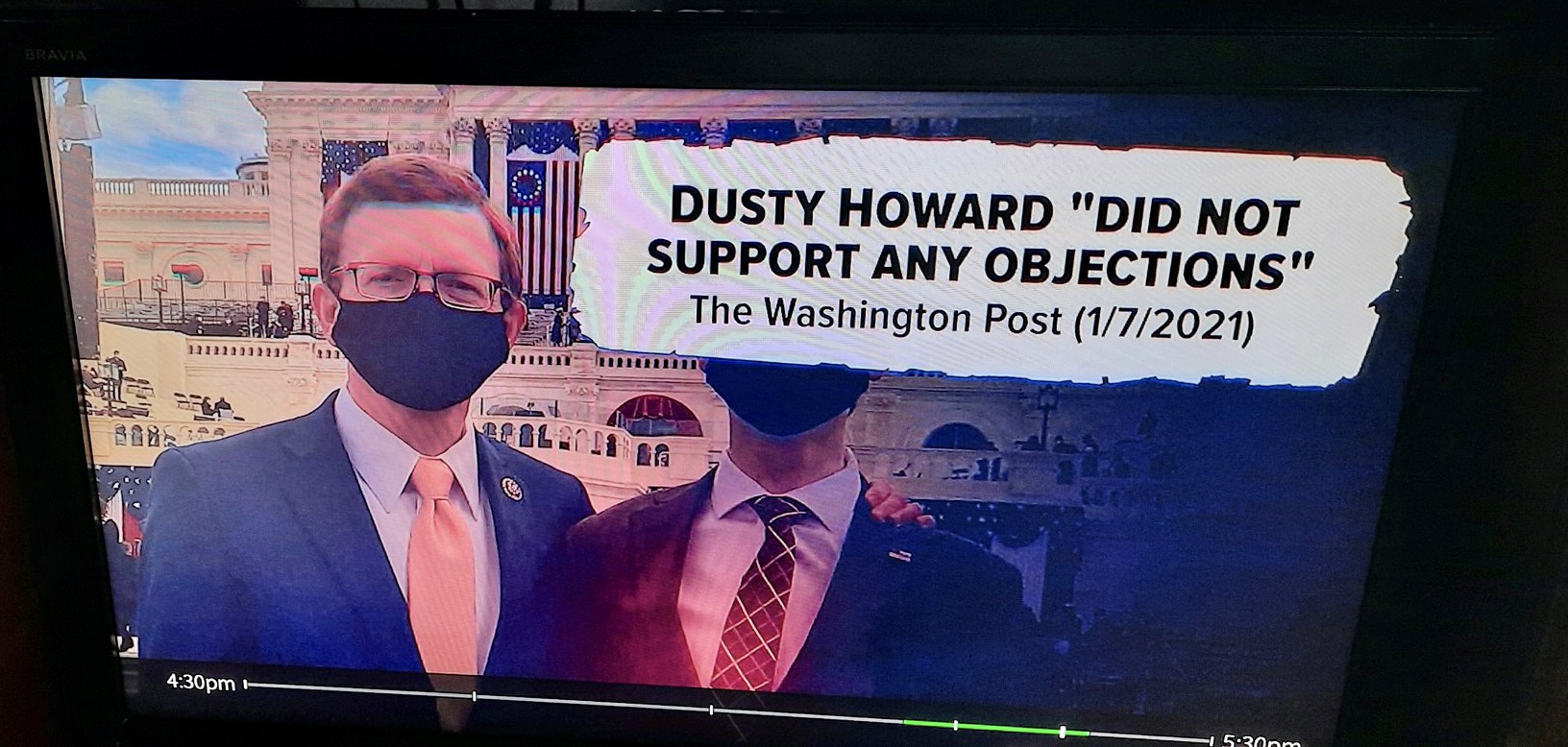
Just had some great photos shared with me from Governor Noem and Congressman Johnson hitting door to door together in Sioux Falls today

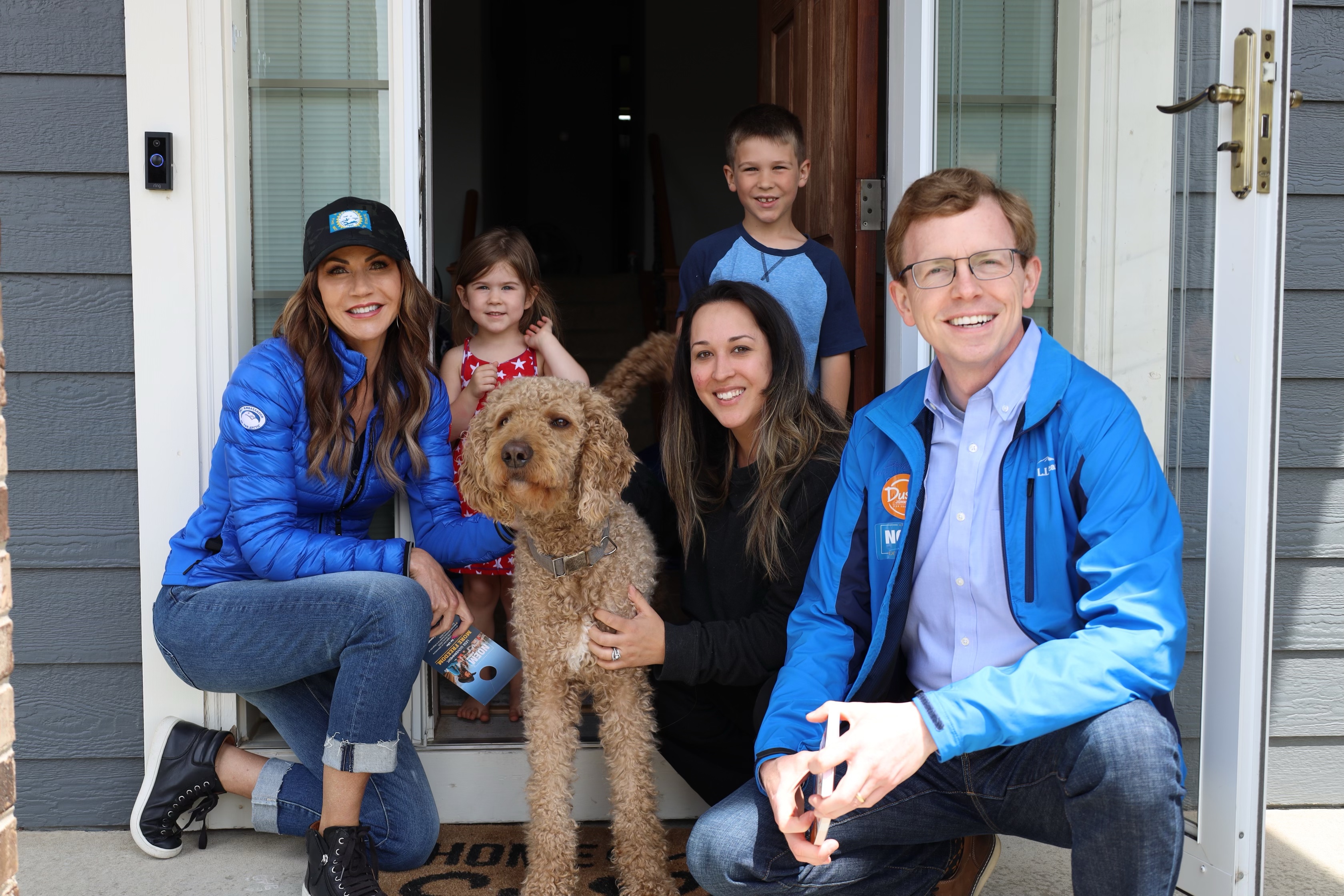
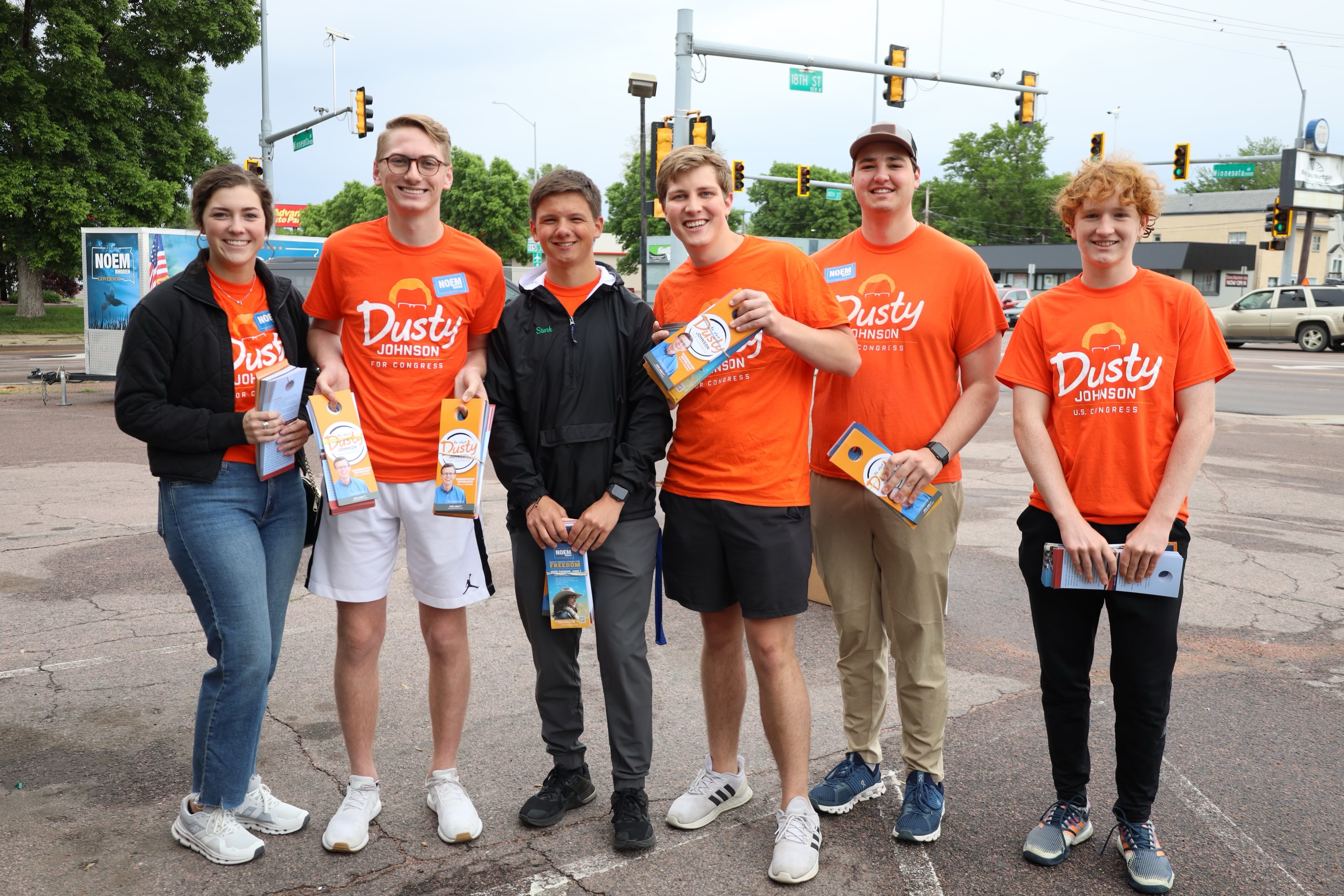


Just had some great photos shared with me from Governor Noem and Congressman Johnson hitting door to door together in Sioux Falls today
This attack card is kind of funny. And it’s even funnier when you realize what happened with it.
Chip Campbell fronted “Republican Direction PAC” sent out an attack mailer this week to District 2, making a number of wild-assed claims about House candidate Jake Schoenbeck, that somehow he’s anti Christian, and will be an evil clone of his father, Senate President pro tempore Lee Schoenbeck. This card actually is basing the attack on the candidate on liking a tweet …because he’s somehow not engaging in some blind form of groupthink? A few things are humorous about this.
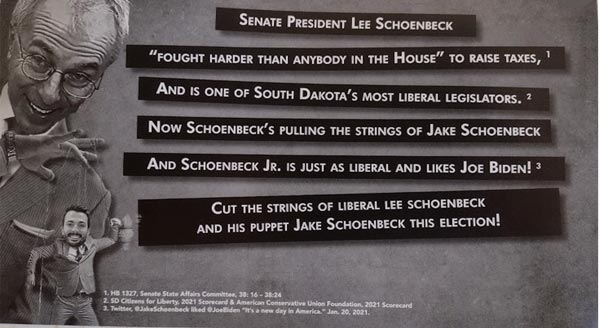
This looks to be yet another attack card out of Rapid City “media consultant” Jordan Mason’s shop. Which you can identify because they all look the same, with the same small caps font, and identifiable mistakes in grammar, year, after year, after year.
The other thing.. Can someone point out on the card, where in this pile of doo doo does it say what Jake Schoenbeck, Jeff Shawd or John Sjaarda are actually running for? It’s not like they lacked the space for that little nugget of information.

But the most glaring error doesn’t come in terms of the clearly bad content on the surface.. it comes under the hood. Because, aside from the fact that it doesn’t mention anywhere what these people are running for, or where they are running, let me fill you in.
Jake Schoenbeck, Jeff Shawd and John Sjaarda are all running in newly created House District 2, as a result of redistricting. And that’s an important distinction, “newly created” and all. Because this was part of a group of postcards that went to District 2.. but it was the District 2 in existence BEFORE the 2022 redistricting reworked the boundary lines, and went into the likes of Castlewood, and other parts of Hamlin county.

Yep. It was actually mailed to the OLD district 2, up north, and not into the NEW District 2 which is wraps around the eastern portion of Sioux Falls, into Brandon across Minnehaha County. I’m told a number of people in the old District 2 received it, and while they knew the Schoenbeck name from the family being in Watertown, they had no idea who those other folks were, and why they were getting it.
So if you’re living in Hamlin, and wondering why you received an attack ad from 200 miles away.. that’s the rest of the story.
And for you Brandon residents, make sure you go out and vote for Jake next Tuesday.
When the out-of-state political action committees start mishmashing between the two candidate names, it’s time for them to be done making commercials.
As you may have noticed, Governor Noem has been active in supporting Republicans in various legislative races, including doing this card for Representative Mary Fitzgerald in District 31:

Ryan Zinke, former congressman and President Trump’s secretary of the interior, tonight issued this video endorsing congressman Dusty Johnson for re-election.
I think Spencer Gosch needs more jump cuts and louder music in his video. Kind of hard to watch..
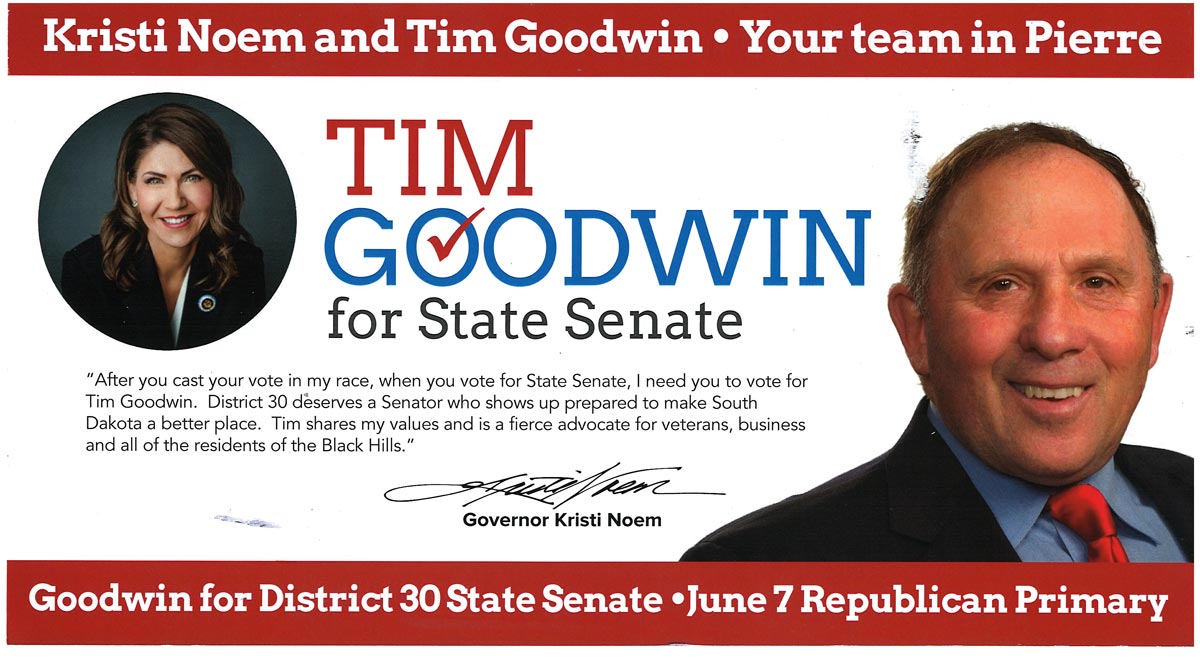
Governor Kristi Noem gets right to the point in this postcard for Tim Goodwin for State Senate: “I need you to vote for Tim Goodwin. District 30 deserves a Senator who shows up prepared to make South Dakota a better place.”
Well, what are you waiting for? Get out there and vote for Goodwin.
I couldn’t help but giggle a little when I saw this in my mailbox.
A letter in a pink envelope addressed to my wife, allegedly from Gubernatorial Candidate Steve Haugaard’s wife. Despite the fact it’s coming from the campaign.
Of course it is. And adding to the awfulness, it was in blue text on matching pink paper:
Awful Mary Haugaard letter by Pat Powers on Scribd
And the coup de grâce? It had a recipe card enclosed, right after you read about how “Steve was voted into leadership by his peers based upon their confidence in him, not by paying them off.” I’m not sure who in their right mind would suggest this to the candidate. It comes off as a new level of patronizing, which isn’t necessarily a good thing for a candidate who has already been accused of misogyny.
At this point in time, really, why does my wife need or remotely want to hear from Mary Haugaard? If she gets a pink letter, does that mean I’ll get a blue one from Steve for the boys?
I’m quite sure Dr. Powers is quite capable of making a judgement about Steve Haugaard based on his positions and policy statements, as opposed to getting an awful campaign letter claiming to be from his wife.
Remember.. it’s almost over.


Gov. Noem Promises to Defend Girls’ Sports, Sue Biden Administration
PIERRE, S.D. – Today, Governor Kristi Noem promised to defend fairness in girls’ sports from an attack by the Biden Administration. The Biden U.S. Department of Agriculture (USDA) is threatening funding for the federal school lunch program and other Supplemental Nutrition Assistance Program (SNAP) dollars if schools and other entities do not adopt a false interpretation of Title IX.
“President Biden is holding lunch money for poor Americans hostage in pursuit of his radical agenda. He is insisting that we allow biological males to compete in girls’ sports or else lose funding for SNAP and school lunch programs,” said Governor Kristi Noem. “South Dakota will continue to defend basic fairness so that our girls can compete and achieve. I would remind President Biden that we have defeated him in litigation before and are ready to do so again. Mr. President, we’ll see you in court.”
Earlier this year, Governor Noem signed the strongest legislation in the country to protect fairness in women’s sports.
Governor Noem previously promised, “[President Biden] see you in court” over the OSHA vaccine mandate, which the United States Supreme Court struck down this past January.
###
From the Sioux Falls Argus Leader, March 17, 1922, the prohibitionist faction of Governor McMaster was all fired up because his opponent George Egan was leaning a little towards loosening those bootlegging laws.