Guest Column: Bluffing Their Way to an Art. V Convention by Judi Caler

(In light of the recent push by the Convention of States to attack Republican legislators and continue to push for passage of a resolution in the legislature for an Article V. convention, I found this guest article interesting enough to share with you for your consideration. -pp)


Bluffing Their Way to an Art. V Convention
Part 1: Validation Schemes
By Judi Caler. 

Sound the alarm!! We are closer than ever before in our nation’s history to Congress’s calling a  convention under Article V of the US Constitution, where we would likely lose our Constitution. And it’s because of yet another deception from the con-con lobby.

Article V says that “The Congress…on the Application of the Legislatures of two thirds of the several States [now 34], shall call a Convention for proposing Amendments [to the US Constitution]…”

There have been approximately 450 applications passed by 49 State Legislatures since 1788, the year our Constitution was ratified. So, whether or not a constitutional convention has been triggered depends upon the criteria Congress uses to determine which of the 450 applications are valid. Only then can Congress count the States that submitted those applications to find out whether or not the 34-state threshold was reached.

On July 19, 2022, US Rep. Jodey Arrington (R-TX), introduced H.Con.Res.101 and  H.R.8419. The former is a purported “call” for a convention.[1] And the latter directs the Archivist of the United States to “authenticate, count, and publish” all non-rescinded applications and notify Congress of its duty to call a convention, if those applications were passed by at least 34 State Legislatures.

Of the 450 applications passed since 1788, about 230 have since been rescinded[2]—leaving about 220 non-rescinded applications from 39 States. So, if H.R.8419 becomes law, Congress will all but guarantee that the first constitutional convention since 1787 will be triggered—simply by establishing “all non-rescinded applications” as the only criterion by which Congress would authenticate applications!


H.R.8419—A Validation Scheme Too Big to Fail

Although counting states from the set of “non-rescinded applications” seems reasonable on its surface, it’s a trick. Every application passed since the 18th century that states hadn’t bothered to rescind would be considered valid under H.R.8419 (or an updated 2023 bill #). And almost 80% percent of those “valid” applications were passed before the 21st Century.

Rep. Arrington would combine all relatively recent applications with applications passed by at least 24 State Legislatures asking Congress to call a convention to propose amendments on obsolete topics, including directly electing US Senators (resolved by the 17th Amendment ratified in 1913); averting the Civil War (ended in 1865); prohibiting polygamy (now outlawed in all 50 states), repealing prohibition (resolved by the 21st Amendment ratified in 1933), prohibiting slavery (resolved by the 13th Amendment ratified in 1865), averting the Nullification Crisis of 1832–33, and adding a Bill of Rights to our Constitution (ratified in 1791).

In fact, we hit the 2/3-state threshold for Congress’s calling a convention per H.R.8419 in…(drumroll)… 1907, and we’ve NEVER dropped below the threshold in the 115 years since! The number of states with non-rescinded applications gradually grew from 34 states in 1908 to 48 & 49 States during the 3 decades between 1970 and 2000; and stands at 39 states today due to rescissions. That’s more than enough States to trigger a convention. (See graph).

Raise your hand if you think the Framers envisioned giving the states centuries in which to reach the 34-state threshold—so that by the time Congress called a convention, the American People would no longer remember or care about the issues that triggered the call!


Common Sense Validations

There are common sense ways for Congress to validate applications that would yield markedly different results than H.R.8419. In addition to considering all rescinded applications invalid, Congress could add the following criteria:

Validation by Obsolescence. Common sense dictates that if the purpose for calling the convention has been resolved (i.e. the Civil War, etc.), the applications should automatically expire.

Validation by Age. If a crisis could be remedied by altering or overhauling our founding document, then 34 States should be able to pass applications within, say, a five-year timeframe.[3] Consider that 46 States enacted COVID-19 legislation within just 10 months in 2020; and all 50 States did so within the 2021 calendar year.[4]

Validation by Type (limited or unlimited). Yale law professor Charles L. Black Jr. (1915–2001) was one of the leading constitutional law scholars of the twentieth century. Black considered all applications asking Congress to call a convention limited by subject, null & void—and that would include most of the applications passed by State Legislatures in the last 45 years. Other scholars agree[5]:

“I believe that, in Article V, the words ‘a Convention for proposing Amendments’ mean ‘a convention for proposing such amendments as that convention decides to propose…’[thus] a State application for a convention limited to one or more proposals or subjects is not an application for the ‘Convention’ denoted by the words in Article V…

“…[I]f thirty-four States may put Congress under a certain obligation by, and only by, requesting X, and thirty-four States request Y instead, then no congressional obligation arises6.  —Charles L. Black, “Amending the Constitution: A Letter to a Congressman

Depending upon which criteria Congress chooses, there are currently valid applications submitted to Congress from NO states, 39 states, or somewhere in between! Change the criteria, and you’ll change the result.


The Convention Deception 

Mark Meckler, President of “Convention of States (COS),” and the other special-interest lobbyists have been falsely assuring legislators for nearly a decade, that a “runaway convention” is next to impossible. That’s because, they say, only when Congress receives 34 identical or similar applications on the same subject or subjects can Congress call a convention; and, they say, that convention would be limited to the subject of the 34 applications.

But the proponents’ own Article V experts contradict their lobbyists! Attorney and Article V scholar John Cogswell, who admittedly bends over backwards to ensure Congress’s calling a convention, made the following points in a 2018 report to the American Constitution Foundation (ACF)7:

“Congress has a duty to call a convention for proposing amendments without any limitations on the agenda of the convention…” p. 2

“There is no such thing as a ‘limited’ constitutional convention because a convention by definition and practice is a free agency and may propose whatever it likes…” p. 18

“…a convention for amendments could easily amend the Constitution in its entirety and replace it with some other document…” p. 27

“…it is unanimously understood by all scholars that the rules of the convention are to be decided by the convention.”  p. 28.

Proponents bury the “too-big-to-fail” validation scheme in one bland adjective—non-rescinded—in §106c(b) under §1(a) of H.R.8419 and in §1(a)(2)(A) of H.Con.Res.101. But the accompanying press release, including legislative summaries and comments by Rep. Arrington, pretend to promote a “Fiscal Responsibility Amendment” and “Article V Accountability.”


H.R.8419 & H.Con.Res.101 are in-your-face evidence that proponents are attempting to manipulate the 34-state count to trick Congress into calling a convention which is inherently illimitable. This is not surprising, coming from the same folks that misled State Legislatures into passing applications for a “limited” convention.

Coming soon: Part 2

Judi Caler is a citizen activist working to defend our Constitution from those who would risk it at an Article V constitutional convention. She serves as Article V Issues Director for Eagle Forum of California.

—–

[1] But since applications from 34 States need to be authenticated before Congress calls a convention, H.Con.Res.101 appears to defy the Constitution.
[2] Compiled from applications posted on the unofficial Article V Library website, corrected for Illinois’ 2022 rescission.
[3] Only 10 States passed applications in the past 5 legislative years (2018–2022).
[4] Select Year (2020 or 2021); and Status: “Enacted” within the COVID-19 Database.
[5] For example, convention proponents John Cogswell and Michael Stokes Paulsen. See Cogswell’s 2018 ACF Report.
6  Yale Law Journal, 199 1972–1973
7 ACF’s goal is to facilitate a “general” convention, where no amendment is declared off-limits in advance by language in the applications. In 2018, John Cogswell conducted a study for ACF and found valid applications from 36 States.

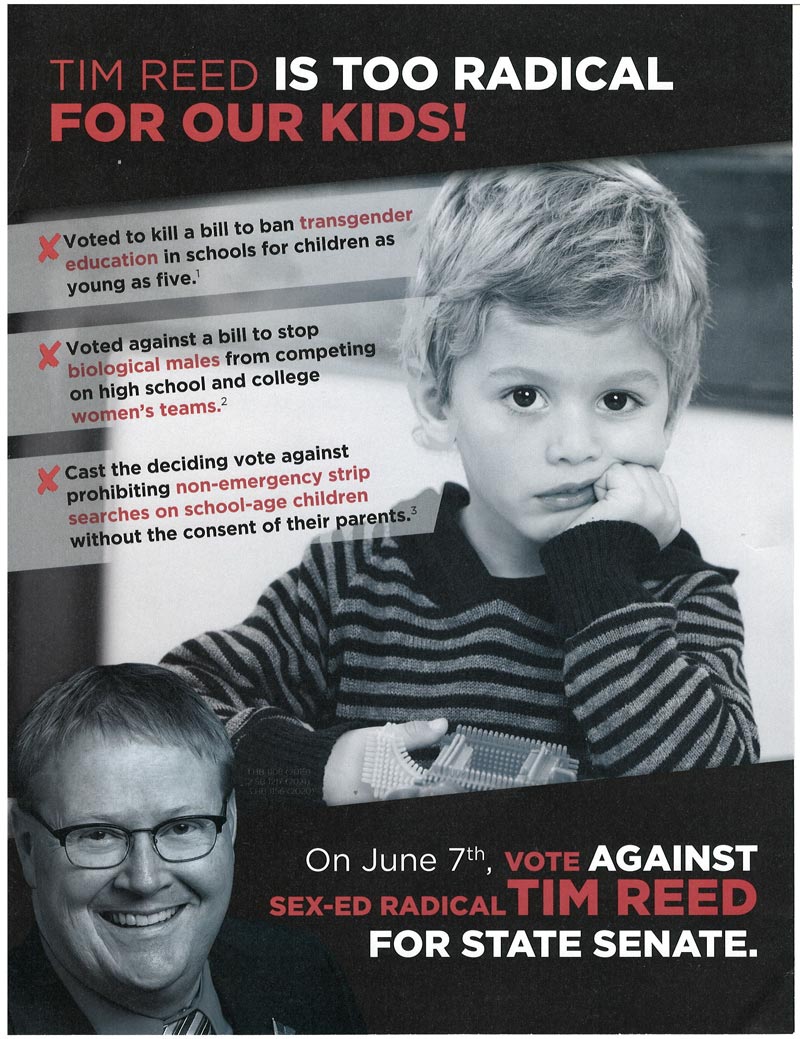
Latest hearing in Koskan child abuse case continued until March

From the Argus Leader and other sources the next hearing in the matter of the accusations against former State Senate candidate Joel Koskan have been moved to March 12:

Koskan was originally scheduled to be arraigned Monday morning, but his court date was moved to 9:30 a.m. March 13, 2023.

and..

While a proposed plea agreement was filed in court in November following the allegations, signatures on the paperwork were dated in September before Koskan was formally charged with child abuse.

In the plea agreement, all prison time would be suspended for Koskan if he agreed to plea guilty. Felony child abuse typically comes with a 10-year prison sentence.

Read the entire story here.

I think we’re also still waiting to see where things end up with the rape charges filed against House candidate Bud May.


Thune, Wicker Call Out U.S. Commerce Department IG for Neglecting Mandated Broadband Oversight Duties

Thune, Wicker Call Out U.S. Commerce Department IG for Neglecting Mandated Broadband Oversight Duties
“Contrary to the requirements of the law, you have failed to fulfill your duties required by Congress.”

WASHINGTON — U.S. Sens. John Thune (R-S.D.), ranking member of the Subcommittee on Communications, Media, and Broadband, and Roger Wicker (R-Miss.), ranking member of the Senate Commerce Committee, today sent a letter calling out U.S. Department of Commerce Inspector General (IG) Peggy Gustafson for failing to fulfill mandated congressional oversight of previously authorized broadband funding. As a result of IG Gustafson’s dereliction of duty, taxpayer dollars intended for broadband services are subject to waste, fraud, and abuse.

“Contrary to the requirements of the law, you have failed to fulfill your duties required by Congress,” the senators wrote. “This is deeply concerning for two reasons: [First,] [the National Telecommunications and Information Administration] has a long and well-documented history of misusing federal dollars when attempting to expand broadband access; and [second] your office has had a significant and ongoing problematic history. Further, Congress has recently heard testimony of funds being used to overbuild existing broadband networks which makes it even more alarming your office would disregard its oversight responsibilities.”

Earlier this week, Thune launched a nationwide broadband oversight effort that will review numerous broadband programs spanning several federal agencies. The primary goal of Thune’s effort is to hold these agencies accountable and ensure that previously authorized broadband funding is being used in the most efficient way possible to protect taxpayer dollars. Thune recently sent a letter to a diverse group of stakeholders, including broadband associations, public interest groups, and free market think tanks to seek their input on the current broadband regulatory structure.

Full letter below:

The Honorable Peggy E. Gustafson
Inspector General
U.S. Department of Commerce
1401 Constitution Avenue NW
Washington, D.C. 20230

Dear Inspector General Gustafson:

As you know, the National Telecommunications and Information Administration (NTIA), housed under the Department of Commerce, is a major driver in fulfilling the Department’s mission to provide reliable broadband services to all Americans.

One of the numerous programs aimed at closing the digital divide is NTIA’s Tribal Broadband Connectivity Program (TBCP).  Established under the Consolidated Appropriations Act, 2021 (P.L.116-260), the TBCP has received nearly $3 billion in funding to support broadband deployment, telehealth, distance learning, broadband affordability, and digital inclusion in Tribal areas. NTIA awarded its first grant under the program on November 16, 2021, and to date, the agency has provided roughly $1.5 billion to over 100 projects.

To ensure taxpayer dollars are used in the most efficient manner possible, Congress required the Commerce Department’s Inspector General (IG) to review TBCP grants awarded by NTIA and make recommendations to address any waste, fraud or abuse with respect to these grants. Specifically, the IG is required to provide its recommendations and report no later than six months after the first TBCP grant was awarded and every six months thereafter. Thus, based on the timing of TBCP grants awarded by NTIA, the first IG report was due on May 16, 2022, and a second report was due on November 16, 2022.

Contrary to the requirements of the law, you have failed to fulfill your duties required by Congress. This is deeply concerning for two reasons: 1) NTIA has a long and well-documented history of misusing federal dollars when attempting to expand broadband access; and 2) your office has had a significant and ongoing problematic history. Further, Congress has recently heard testimony of funds being used to overbuild existing broadband networks which makes it even more alarming your office would disregard its oversight responsibilities.

Please provide a specific timeline by Friday, December 16, 2022, as to when Congress will receive your recommendations as mandated by Congress. We urge you to carry out the duties Congress has entrusted to your office.

Thank you for your attention to this important matter.

Sincerely,

###

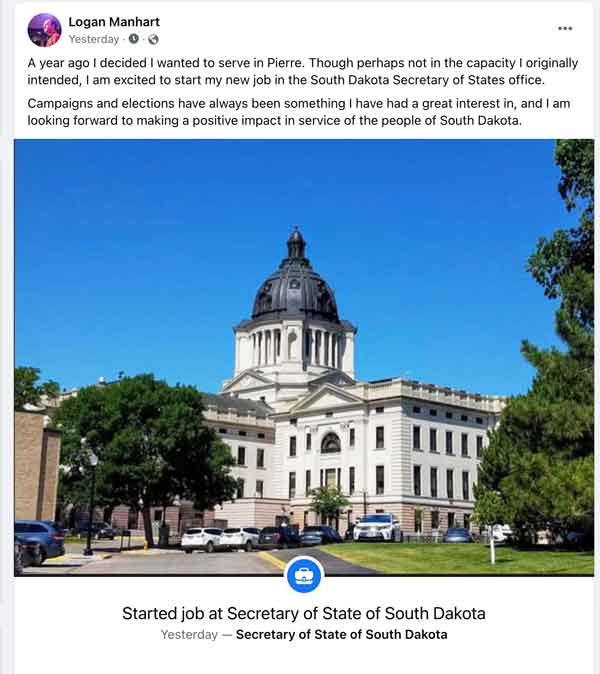
Secretary of State website updated with Monae Johnson masthead, other changes coming as we come full circle.

From sdsos.gov, the masthead for the South Dakota Secretary of State’s website is now updated, and showing signs that a new Secretary of State is in office:

What other changes will we see? I did catch in one of her speeches that Secretary Johnson mentioned we should have greater campaign finance disclosure to allow donors to be searchable on the SDSOS website. Which I found extremely interesting, as the capability was there at one point, only to be removed.

The ability to search donors across the entire system was put in place after Secretary of State Jason Gant took office back in 2011, in the form of the “C.A.S.H.” system as implemented by the office at the time:

For open government and those who research donations, it was revolutionary and an absolute boon. The problem? Legislators hated it. They really hated it.

In the start, legislators were required to go into the system and key their donations in, or upload a spreadsheet. This represented a big change to the procedure under Chris Nelson as Secretary of State where they just sent in a paper form.   Change is hard, especially for those in the legislature who lean away from the younger portion of the age scale.  There was resistance in going fully electronic from some. Another part was that was for the system to automatically account and to trigger reporting when you hit the $100 threshold for reporting. So it required all small donor amounts to be put in the system, and that also brought pushback from those who didn’t like the smaller donors being entered.  And, there was a person or two who didn’t care for the disclosure that the system brought, because the system also provided the same transparency to Political Action Committees.  If you were juggling things across several PACS, it made it pretty easy to ferret that out, and there were those who didn’t like that.

After some time battling complaints of those who held the purse strings, there were changes made.  Paper forms could be submitted if so desired, and they would be entered into the C.A.S.H. system, keypunched by SOS employees. But the handwriting was on the wall with enough elected officials disliking aspects of the new system.

When Secretary of State Shantel Krebs took office, the entire system was shelved, and a system put in place that at the time had worse lookup capability than what was available under SOS Nelson, and would pull up the once again paper forms that legislators would mail and fax in. Since it’s earliest form, the system has been slightly improved and refined in the eight years it has been in operation, but at it’s heart, it is largely a simple lookup tool for paper forms.

A decade later, we’re now back full circle. With landmines that I suspect are still there, but still a call for voters wanting to have the ability to know more about our elections.

If Secretary of State Monae Johnson wants to improve the system as she has mentioned with greater disclosure, there are a few hurdles she has to cross, mainly in how she would get the information in, and who would do the input? And how to make it user friendly.

But, increasing transparency and open government is always a good thing.

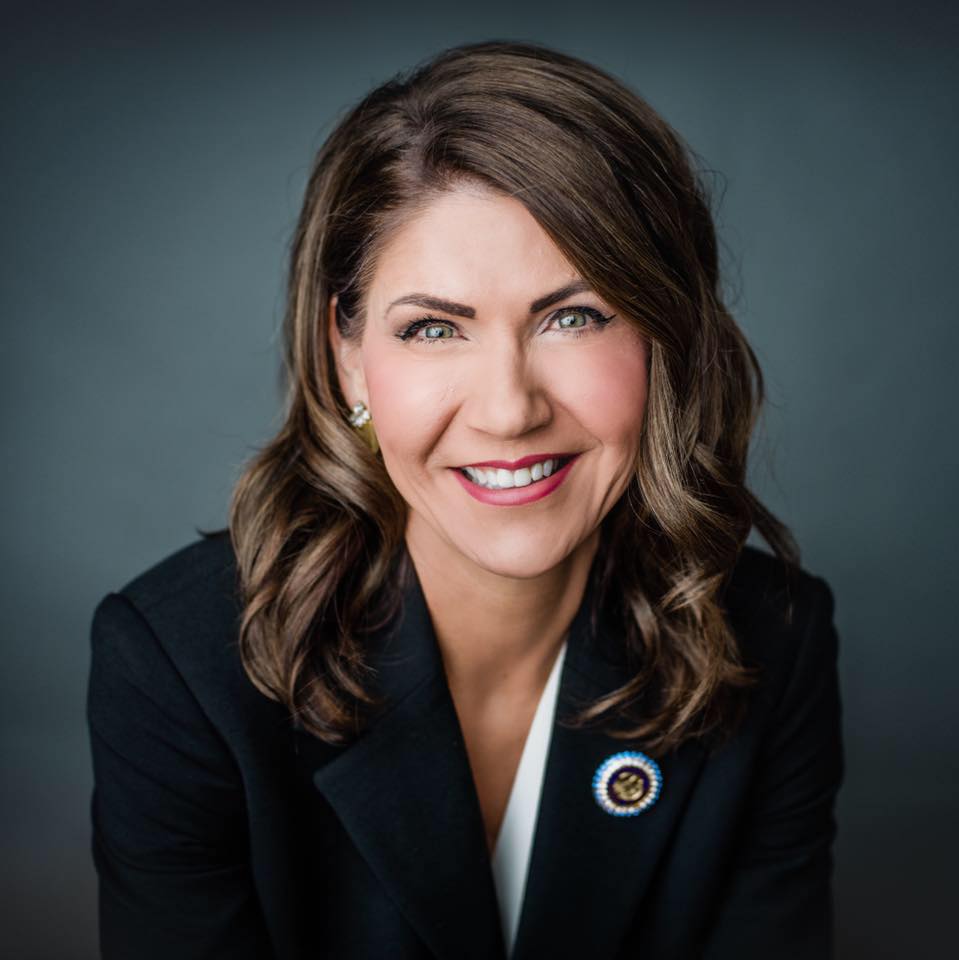
Gov. Noem Calls for Immediate Review of State Investments

Gov. Noem Calls for Immediate Review of State Investments

PIERRE, S.D. – Today, Governor Kristi Noem called for an immediate review of all investments under the control of the South Dakota Investment Council in order to determine if taxpayer dollars are being invested in companies that pose a threat to our national security, like those in Communist China. She challenged the Investment Council to complete the review in 7 days.

“South Dakotans deserve to know if their taxpayer dollars are being invested to benefit the Chinese Communist Party,” said Governor Kristi Noem. “The Investment Council has ensured that South Dakota has the best-funded pension in the country. But it is not possible to make good deals with bad people. If this review shows that such investment is taking place, then the Investment Council should propose alternative investment options.”

Last week, Governor Noem signed an Executive Order banning TikTok for South Dakota state government.

This week, Governor Noem wrote in the Wall Street Journal, “Many American intelligence officials believe that the Chinese Communist Party poses the greatest threat to the U.S., and most American people agree. If [President] Biden won’t take this threat seriously, then Congress and state governments must fill the gap.”

###

Thune: Biden Administration’s Radical ESG Policies Have Real-World Impacts

Thune: Biden Administration’s Radical ESG Policies Have Real-World Impacts

“Between higher energy prices and higher food prices, the kind of financial hardship Americans have been experiencing during our current inflation crisis could become a fixture for the long term.”

Click here or on the picture above to watch the video.

WASHINGTON — U.S. Sen. John Thune (R-S.D.) today expressed his concerns regarding President Biden’s far-reaching environmental, social, and governance (ESG) agenda. Thune noted that the administration has failed to examine the impact ESG policies will have on the price of food and energy, and he warns that these overreaching regulations could result in serious consequences for essential industries within our economy.

Thune Urges President Biden to Be Honest About Real-World Costs of Climate Agenda

Thune Urges President Biden to Be Honest About Real-World Costs of Climate Agenda

“As our nation continues to grapple with record-high inflation, administrative actions that increase prices should be the last thing on your agenda.”

WASHINGTON — U.S. Sen. John Thune (R-S.D.) today led his colleagues in calling out President Biden and his administration for forcing their radical environmental, social, and governance (ESG) policies onto the American economy in pursuit of their unrealistic environmental agenda. The letter highlights various actions by financial regulators that threaten to choke off certain industries’ access to capital, which could increase the price of food and energy for businesses and families in the midst of record-high inflation.

“All of these actions have real-world impacts that your administration would be well served to evaluate,” the senators wrote. “For instance, establishing rules, strategic plans, and principles to coerce financial institutions and other firms to limit their lending and exposure to certain businesses drives up prices on consumers. Choking off access to capital for companies in the energy sector in an attempt to decimate the fossil fuels industry drives up the cost of fuel and electricity at a time of record costs, further stoking inflation. Discouraging lending to farming and ranching communities in an attempt to reduce natural livestock emissions strains supply chains and increases the cost of food. Therefore, it would be prudent for your administration to actually take the time to evaluate the costs its actions are directly and indirectly imposing on American businesses and families, as well as conduct the necessary analysis as required by the Regulatory Flexibility Act. As our nation continues to grapple with record-high inflation, administrative actions that increase prices should be the last thing on your agenda.”

The letter was also signed by U.S. Sens. John Barrasso (R-Wyo.), Marsha Blackburn (R-Tenn.), Mike Braun (R-Ind.), Shelley Moore Capito (R-W.Va.), Kevin Cramer (R-N.D.), Ted Cruz (R-Texas), John Hoeven (R-N.D.), Chuck Grassley (R-Iowa), Ron Johnson (R-Wisc.), Cynthia Lummis (R-Wyo.), and Roger Wicker (R-Miss.).

In July, Thune led his colleagues in introducing the Food and Energy Security Act, legislation that would prohibit the Biden administration from forcing its ESG agenda onto the American economy. It would also require federal financial regulators to analyze the impact of their rules on businesses that are involved in the agriculture or energy supply chains and how those rules could affect food and energy prices for consumers. Thune recentlycalled on the White House to examine the impact that its radical ESG policies will have on the price of food and energy before imposing these new rules and costs on American families.

Fox News recently highlighted Thune’s effort to hold the Biden administration accountable for pursing ESG policies.

Full letter below:

The Honorable Joseph Biden
President of the United States
1600 Pennsylvania Avenue Northwest
Washington, D.C. 20502

Dear President Biden:

As we turn to a new Congress in a few weeks, we write to draw your attention to our ongoing concerns with your administration’s unrealistic environmental agenda and focus on government-imposed environmental, social, and governance (ESG) initiatives. While businesses may elect to pursue their own ESG agendas as part of a free-market society, the heavy-handed imposition from the federal government will have (and in some cases, already has had) negative real-world impacts on our economy and American families, especially by deepening the ongoing energy and inflation crises.

In the nearly two years since you were sworn into office, your administration has made countless efforts to push through its sweeping environmental agenda through the financial regulators. These efforts, though sold by administration officials as steps necessary to mitigate climate risks, are solely an attempt to strong-arm financial institutions and other firms into choking off capital to industries that are foundational to our nation’s economy, yet are continually villainized by the far left.

One example of your administration’s overreach is the Securities and Exchange Commission’s (SEC’s) proposed climate-disclosure rule that would not only require registrants to disclose information about their greenhouse gas emissions, but, in many cases, indirect emissions from upstream and downstream activities (i.e., their suppliers and customers) in their value chain – known as scope 3 emissions. Scope 3 emissions are not produced or even controlled by the regulated organization, making this rule entirely unworkable for any public company to comply with. The rule would also require registrants to comply with new financial impact metric disclosure requirements and determine the effects of certain climate-related events on each line item of their consolidated financial statements. The rule would almost certainly reduce or potentially even eliminate businesses’ access to the resources they need to operate, as it would discourage firms from investing in or extending capital to them. The SEC rule would be destructive for businesses in the energy and agriculture sectors, but to businesses, in particular small businesses, across all sectors of our economy as well.

Equally alarming is the recently proposed Federal Supplier Climate Risks and Resilience Rule that would similarly require certain federal contractors to publicly disclose not only their greenhouse gas emissions, but scope 3 emissions, compounding the burden imposed by the SEC. Ultimately, private companies would be disincentivized to apply for these federal contracts altogether, which would increase project costs for the federal government and harm taxpayers.

Unfortunately, your administration’s efforts to use financial regulators to force through an unrealistic environmental agenda do not end there. After joining the Network of Central Banks and Supervisors for Greening the Financial System, an organization with the stated agenda of “mobilizing mainstream finance to support the transition toward a sustainable economy,” the Federal Reserve announced a pilot program to analyze the climate-related financial risks for the nation’s largest banks. The Office of the Comptroller of the Currency, the Federal Deposit Insurance Corporation, and, most recently, the Federal Reserve have all published draft principles for climate-related financial risk management for large banks. The Department of Labor just finalized a rule that would, in practice, require pension fiduciaries to consider climate change and ESG factors in making investment decisions, irrespective of their pecuniary relevance. And last, but certainly not least, the National Credit Union Administration published a since-rescinded strategic plan that seemed to recommend credit unions need to alter their field of membership and loan offerings in farming communities.

All of these actions have real-world impacts that your administration would be well served to evaluate. For instance, establishing rules, strategic plans, and principles to coerce financial institutions and other firms to limit their lending and exposure to certain businesses drives up prices on consumers. Choking off access to capital for companies in the energy sector in an attempt to decimate the fossil fuels industry drives up the cost of fuel and electricity at a time of record costs, further stoking inflation. Discouraging lending to farming and ranching communities in an attempt to reduce natural livestock emissions strains supply chains and increases the cost of food. Therefore, it would be prudent for your administration to actually take the time to evaluate the costs its actions are directly and indirectly imposing on American businesses and families, as well as conduct the necessary analysis as required by the Regulatory Flexibility Act. As our nation continues to grapple with record-high inflation, administrative actions that increase prices should be the last thing on your agenda.

Of course, financial institutions and other firms need to be mindful of their exposure to and concentration in certain industries to ensure safety and soundness. However, your administration must recognize that, though these ESG-type regulatory actions are generally targeted at the nation’s largest financial institutions and Wall Street firms, they have a trickledown effect on our nation’s community banks and credit unions that are feeling the pressure from Washington. These entities, which are essential for economic opportunity and stability across the country, are concerned about how your administration’s myopic environmental agenda could impede their ability to lend to their clients and foster the growth necessary to steer our economy away from a recession. And in rural communities, community banks and credit unions are acutely wary of how your administration’s overreach could harm their ability to lend to their agriculture clients.

As you head into the second half of your current term, it is vitally important that your administration, prior to taking action and pumping out rules, actually look beyond the beltway and take into account the real-world impacts that financial regulators’ environmental actions have on businesses, families, and community banks and credit unions across the nation. This common sense is long overdue.

Sincerely,

###